Advisory Services
You know your business. Now use your numbers.
Most business owners are great at running their business — but flying blind on the financial side. We help you build a plan for where your money is going, where it needs to go, and how to get there.

What Advisory Services Mean
Bookkeeping tells you what happened. Advisory services help you decide what happens next. Through strategic budgeting and cash flow forecasting, we help you move from tracking past activity to planning your financial future — with confidence instead of guesswork.
Our advisory services focus on two key areas:
Annual Budgeting
Build a financial roadmap for the year that aligns your resources with your goals — then track performance against it month by month.
Cash Flow Forecasting
See what’s coming before it arrives. A rolling 13-week forecast so you’re planning ahead, not reacting to surprises.
Annual Budgeting
Your budget is the financial roadmap for the year ahead — but only if it’s built around your actual future goals, not just last year’s numbers.
We help you build a strategic annual budget that aligns your financial resources with where you want your business to go – covering revenue and expense planning, profitability and margin analysis, owner compensation, and tax-aware targets.
Then throughout the year we monitor actual performance against that budget every month, identifying what’s driving results and adjusting the plan when circumstances change.
The goal isn’t a perfect forecast. It’s a living document that keeps your financial decisions connected to your goals all year long.


Cash Flow Forecasting
Profitable businesses still run out of cash. It happens when income and expenses don’t line up in timing — and it’s one of the most common reasons healthy businesses hit a wall.
Cash flow forecasting gives you visibility into your future financial position so you can plan around those gaps instead of being caught off guard. We build and maintain a rolling 13-week forecast that tracks:
- Expected income and timing of payments
- Payroll and operating expenses
- Debt payments and taxes
- Owner draws
- Timing gaps that affect liquidity
This isn’t about predicting the future perfectly — it’s about giving you enough visibility to make smarter decisions around growth, hiring, and investments before the money is already gone.
The Step By Step Growth Framework
1. PREPARE
Trust your numbers
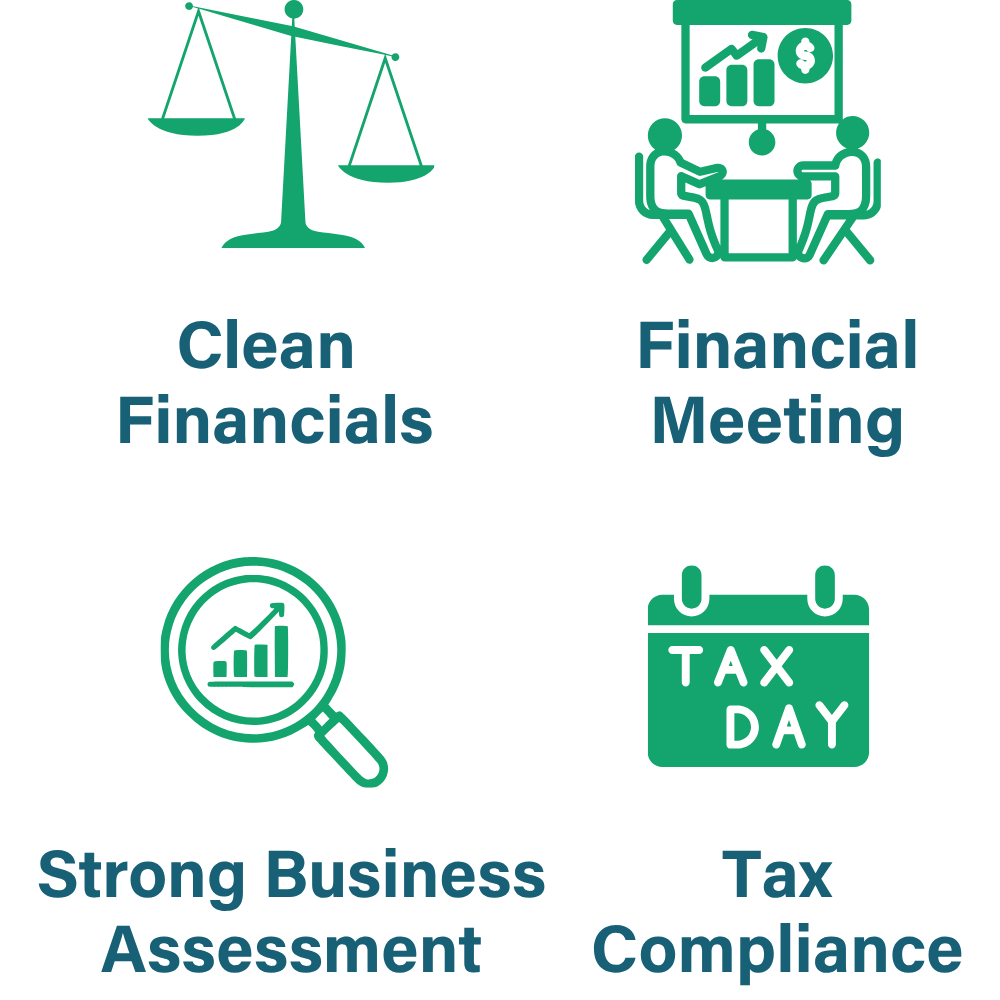
Before any planning can happen, your financial foundation has to be solid. That means having clean, timely books, up-to-date tax and payroll compliance, and a clear picture of where your business actually stands today. This is where we make sure the numbers you are working from are numbers you can trust.
2. VISUALIZE
Stop guessing
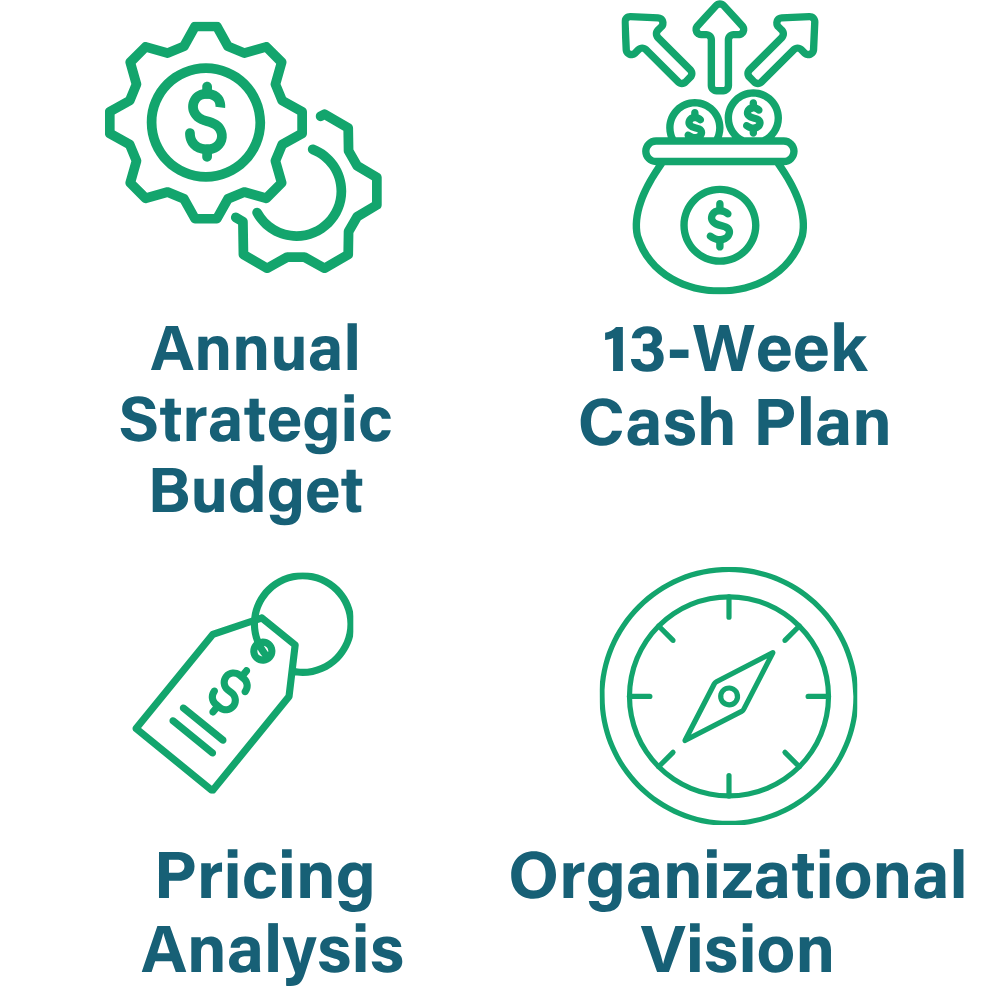
With accurate financials in place, we build the forward-looking plan. That includes your annual strategic budget and a rolling 13-week cash flow forecast, along with guidance and tools to help you evaluate pricing and profitability. You stop guessing and start planning with intention.
3. Stabilize
Build habits that hold
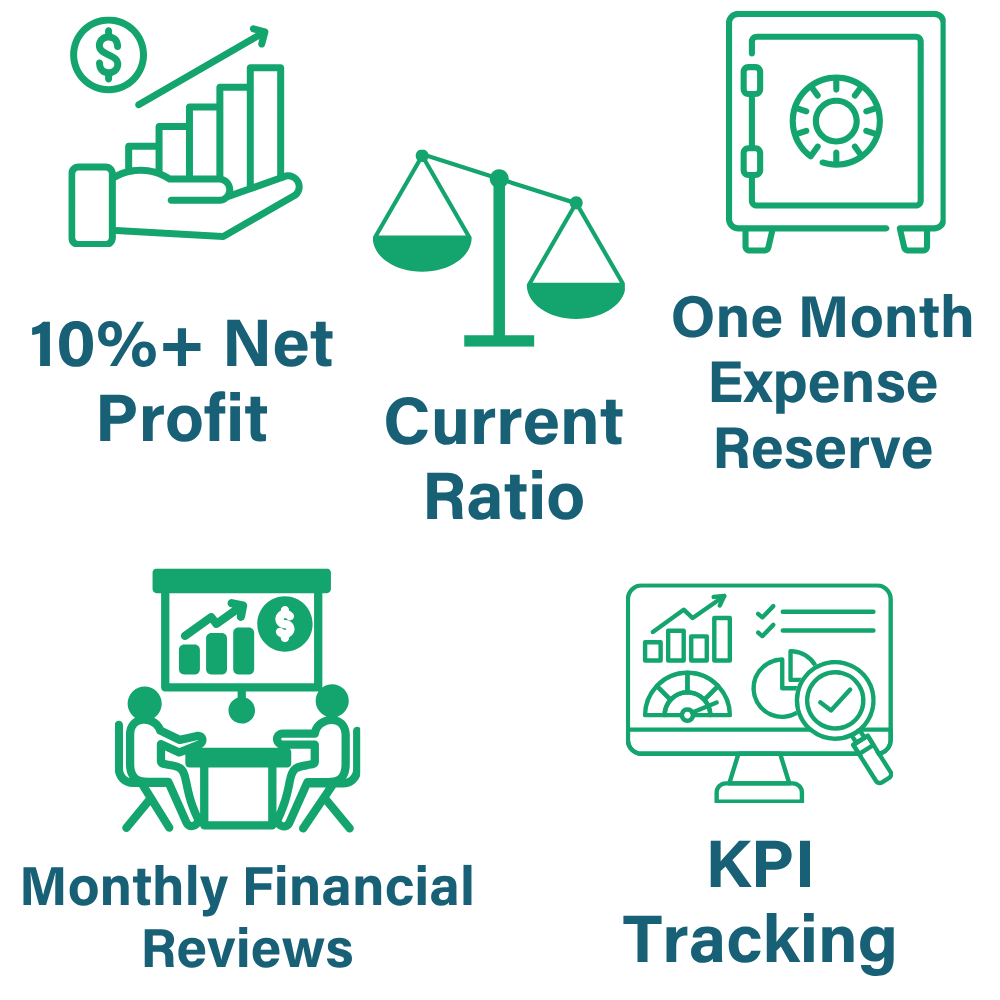
Once the plan is built, we help you monitor the benchmarks that signal a truly healthy business – consistent net profit above 10%, a cash reserve covering at least one month of expenses, clean accounts receivable, and a monthly financial review rhythm your team can rely on. This is where financial clarity becomes a habit, not a one-time project.
What Advisory Services Mean
From Guessing to Confidence In One Budget Cycle for a Home Services Business Owner
A home services business owner came to us after years of guessing on pricing. Every January she faced the same impossible calculation – her team deserved raises, her health insurance costs were climbing, her operating expenses kept going up. But her previous accounting firm had never helped her think through any of it. When she finally asked her accountant directly about pricing, he laughed and told her she was the business owner – what did he know about pricing?
So she guessed. One year she raised prices too much and lost clients. The next year she held back out of fear and quietly hurt her own profitability. Neither felt right because neither was grounded in real numbers.
When we worked through the annual budgeting process together, everything changed. We built a model with actual assumptions – projected raises for her team, health insurance increases, marketing spend tied to her growth goals, all of her operating expenses laid out against her revenue targets. We ran the scenarios until the numbers told a clear story. It turned out she didn’t need to raise prices as much as she feared and she could still hit her profitability goals comfortably.
The result wasn’t just a better budget. When it came time to raise prices with her clients, she walked into those conversations with complete confidence because she knew exactly what the numbers supported. When it was time to give her team raises, she did it freely – no guilt, no second-guessing, no fear that she was quietly damaging her business. She had planned it all out and the plan was real.
That’s what advisory services actually do. They replace the guessing with a plan you can stand behind.
FAQs
What’s the difference between bookkeeping and advisory services?
Bookkeeping focuses on recording what already happened and producing accurate financial reports. Advisory services take that information and use it to help you plan ahead — through budgeting, forecasting, and financial analysis. One looks back; the other looks forward.
Why is cash flow forecasting important?
Even profitable businesses can run short on cash when income and expenses don’t line up in timing. Forecasting helps you see those gaps before they become a problem — so you can make decisions about spending, hiring, or growth with your eyes open.
What is a 13-week cash flow forecast?
It’s a rolling three-month view of your expected income and expenses — updated weekly so it reflects your next 90 days. It helps you anticipate cash gaps and make informed decisions instead of reacting after the fact.
What's the difference between advisory and CFO services?
A fractional CFO typically focuses on capital raising, investor relations, and executive-level decisions like mergers, acquisitions, and debt restructuring. It’s a broad role that often requires someone embedded deeply in the leadership team.
Our advisory services focus on something more specific and more immediately useful for most growing businesses – helping you build a budget that reflects your real goals, forecast your cash position so you’re never caught off guard, and understand your numbers well enough to make confident decisions every month.
For most businesses between $500K and $10M in revenue, that’s exactly what moves the needle. You don’t need someone negotiating your next funding round. You need someone who can tell you whether you can afford to hire, what your prices need to be to hit your profit targets, and where your cash is going over the next 90 days. That’s what we do.
How often do advisory clients meet with your team?
It depends on what you need. Advisory clients meet weekly, bi-weekly, or monthly. These meetings are where we review performance, check in on the budget and forecast, and adjust the plan as your business evolves.
Do I need bookkeeping services before starting advisory work?
Advisory services require accurate financial data to be meaningful. If your books aren’t current or reliable, we’d need to address that first — either through a Diagnostic Review or a cleanup — before we can build a useful budget or forecast.
How does the Step By Step advisory process work?
We start by understanding your current financial position, then build a strategic budget and rolling cash flow forecast. From there, we monitor performance throughout the year and meet regularly to review results, answer questions, and adjust the plan as your business changes.